Saturday, August 22, 2020

The 16 Most Depressing Bright Eyes Songs of All Time (Number 1 Will Shock You!)

We've finally seen the release of the 8th Bright Eyes album (that's right, 8th) as well as maybe actually the final final Bright Eyes album this time, Down in the Weeds Where the World Once Was (August 21, 2020). 

In celebration, here is a list of the 15 most depressing Bright Eyes songs.

When doing ruminations on the "saddest" Bright Eyes songs, the word "sad" could mean many many things. There are a lot of sad tunes that are really beautiful and leave you with a sense that things are going to be better for our little Conor Oberst in the future.

This is not that list.

This is a list of the songs that are the most depressing, most downer, no hope slogs that Bright Eyes has to offer us for when you need a good cry.

I DID make a few other playlists to go along with this post: the most heartbreaking Bright Eyes songs, the most surprisingly fun Bright Eyes songs, the most hopeful Bright Eyes songs, the most dirtbag Bright Eyes songs. Check them out here

Tracklist:
15. Arienette
14. Feb. 15th
13. It's Cool, We Can Still Be Friends
12. When The Curious Girl Realizes She Is Under Glass
11. Going For The Gold
10. If Winter Ends
09. Don't Know When But A Day Is Gonna Come
08. Napoleon's Hat
07. A New Arrangement
06. The Big Picture
05. Hot Car in the Sun
04. A Spindle, A Darkness, A Fever and A Necklace
03. No Lies, Just Love
02. Padraic, My Prince
01. Amy in the White Coat
#1 W/ A BULLET? Scroll to see! 


Listen on spotify (embed below)


Read More ::

Friday, August 21, 2020

4 Bonus Bright Eyes Playlists


These are four bonus playlists to compliment "The Most Depressing Bright Eyes Songs of All Time," found here I made these in celebration of the release of Down in the Weeds Where the World Once Was (August 21, 2020). 

Listen to the playlists below:

Read More ::

Thursday, August 02, 2012

New DESAPARECIDOS: Interview with Conor Oberst from Huffington Post


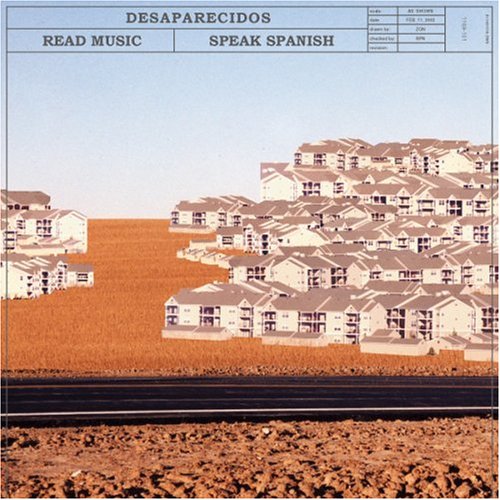
Not too long ago, Conor Oberst wrote a song and filmed a video at the Arizona country border in protest against the state's immigration enforcement laws. The tune was "Coyote Song" and you can check it out here. The Huffington Post just published an excellent interview with Conor Oberst about the resurgence of DESAPARECIDOS. If you haven't heard their album Read Music/Speak Spanish, (which came out ten years ago apparently!) check it out right now. It's one of my favorite albums of all time. Hopefully, this anger at injustice will fuel another record.

Read the article from the Huffington Post below.


"I'll never understand how destroying families through deportation benefits our society."
Conor Oberst, the singer-songwriter who was the voice of a generation well before Lena Dunham took a stab at it, is now 32 years old. And though he's best known for Bright Eyes' aching and somber folk songs, he's angry.

He's angry because America is "destroying families through deportation," and because Sheriff Joe Arpaio of Maricopa County, Ariz. is proud to be compared to the KKK. And when Oberst is upset, he doesn't rally a militia of Minutemen or over-zealous officers, he writes a punk-rock song.

And so, in the process of striking back against Arizona's continued harsh treatment of undocumented immigrants, Oberst recorded some new music with some old friends. Joining the lead singer on "MariKKKopa" -- which is debuting today exclusively on HuffPost Entertainment -- are Landon Hedges, Matt Baum, Denver Dalley and Ian McElroy. The original lineup of the Desaparecidos, Oberst's early-2000s post-hardcore band, is back.

The single -- which is available for purchase August 2 and is accompanied by "Backsell," another track -- features Oberst adopting the voice of anti-undocumented immigrant groups. The lyrics approach bloodthirst ("Drag them from their beds / Cause it's their turn for someone to get hurt") and offer a haunting look into the mentality Oberst suggests drives Sheriff Joe's police department.

Read More ::

Thursday, May 17, 2012

Descending the Circles of Bright Eyes Hell: The Early Albums

Published on thebomberjacket.com

"Who looks outside, dreams; who looks inside, awakes.”
—Carl Jung
There are videos on youtube of Conor Oberst, frontman of Bright Eyes and various other projects, from when he was in his tween years. One in particular comes to mind of a scrawny boy with a high crackling voice and round John Lennon glasses in a record store in Omaha, Nebraska, over-excitedly ranting about a record store he loved. There was this image of Conor Oberst with that trademark messy done-at-home haircut, moping in the basement of his parent’s house, surrounded by books and records, writing music and wailing through tear-stained and clenched eyelids. It’s a scene like a the lyric from Letting Off the Happiness’ “The City Has Sex,” which goes, “There’s a kid in the basement with a four track machine / and he’s been strumming and screaming all night down there / The tape hiss will cover the words that he sings / They say it’s better to bury your sadness.” It’s a charming image, but it’s one that Oberst has never really been able to shake, despite all his new sounds, solo or side projects and haircuts.
Even to this day, it seems like Bright Eyes is quickly disregarded by many as being sad emo music made by a little boy, when there’s really much more to it than that. Now, looking back at those early albums twelve and then some years later, hopefully a more accurate perspective on Bright Eyes can emerge. The real relevance of the band is much more than just well penned sorrow. The lyrics are loaded with poetry that is severely self-conscious, self-deprecating, self-absorbed and just about any other hyphenated "self" term one could imagine. Every album is an introspective adventure, an psychological journey into deeply understanding oneself and one’s emotions. It's something like Carl Jung's methods or Sigmund Freud’s psychoanalysis or Joseph Campbell’s “The Hero With A Thousand Faces,“ which relates mythological odysseys to psychology and is the basis for the Hollywood movie formula. Or it could even be like Dante’s excursion into hell in “The Inferno.” The adventure is most evident on Fevers & Mirrors, as the album's main focus is self-examination, but it’s also present on each recordThe lyrics may be seem solipsistic, but that’s what makes it universal, as everyone has to face the reality of themselves in the mirror at one time or another. It makes the music into something helpful to listen to for anyone going through an emotional, existential or identity crisis…or maybe enabling those emotions is the worst possible choice. It’s always hard to decide. Yet, that’s another constant theme to Bright Eyes songs, the flexibility and confusion of truth.
May 1, 2012 saw the last round of reissues of Bright Eyes’ early releases; albums and EPs that were only previously available on vinyl compiled into a boxed set. The records represent some of Bright Eyes’ most inaccessible material and as such, this group of reissues is probably a bad starting point to dive into as a first exposure to the band. As the records get progressively easier to listen to, even going backwards through a discography mimics that inward adventure, with each one becoming another descent into a deeper circle of self-inflicted hell. So, it’s probably better to start with a more recent release and work backward. The easiest way for the likes of casual listeners to get sucked in might be from the upright pop and conscious attempt at positivity of the most recent The People’s Key or the messy full member collaboration of Conor Oberst and The Mystic Valley Band’s Outer South or maybe when his warbling voice is blended with Jim James and M. Ward on Monsters of FolkWhatever the starting point, it’s better to let curiosity slowly tug you backwards, and downward, after that.

Read More ::

Sunday, March 06, 2011

VIDEO: Bright Eyes :: Shell Games


Bright Eyes :: "Shell Games" :: The People's Key

Directed & Edited by: Nik Fackler ~ Cinematography by: Sean Kirby ~ Produced by: Dana Altman


Below the jump, the first video from Bright Eyes' The People's Key. A simple little short of the band playing in a chiaroscuro cabin during a snowy winter. It's one of the only that features a band playing music, songwriter Conor Oberst having a fit with a microphone in the center of it all. Highlights: it features a monkey and a baby kangaroo.


Website: conoroberst.com or thisisbrighteyes.com  
Facebook: facebook.com/pages/Bright-Eyes
Twitter: twitter.com/brighteyesband
MySpace: myspace.com/brighteyes

www.saddle-creek.com


Read More ::

Thursday, March 03, 2011

Bright Eyes Interview : Performer Magazine

In the last issue of Performer Magazine, there was an interview with Bright Eyes that was unique because it was mostly focused on the recording technique of the band. The article is an interesting look at the creative process of the Conor Oberst, Nate Walcott, and Mike Mogis team. Read the interview below or at Performer.com: here.

The Reinvention of Bright Eyes
By: Daniel Kohn
In the nearly four years since the last Bright Eyes LP, Conor Oberst has been very busy. Between his work with Monsters of Folk and the Mystic Valley Band, the singer/songwriter hasn't had a dull moment. While working with Monsters of Folk, Oberst learned what made his colleagues, M. Ward and Jim James of My Morning Jacket tick. "It was great, it was like taking a look behind the curtain and seeing how things worked," Oberst remarks. "I learned a lot from watching those guys work." And it shows on the latest Bright Eyes album, The People's Key. Like each of the band's previous records, there are a slew of appearances by many in the group's far-reaching network of friends. Performer caught up with Oberst to talk about the band's new studio, the direction of the group's sound and his songwriting process. Catch Bright Eyes in April when they perform at Coachella, and read our full review of The People's Key in our February issue.


What made writing The People's Key different than the last few side projects you've worked on?


Every record is sort of a different experience. To be back with Mike [Mogis, producer and multi-instrumentalist] and Nate [Walcott, trumpet and piano] was nice. We were making a whole record from start to finish in our studio, which we built a couple of years ago and haven't had a chance to use yet. We knew what we didn't want it to be, I guess, more than what we wanted it to be. We were burned out on the Americana, rootsy kind of thing, so we wanted to step away from that.


Since this was the first time you've recorded in your new studio as Bright Eyes, what was it like working in the space from start to finish? Do you guys use Pro Tools or tape?


We recorded this on tape. Mike has a hybrid approach. We record onto to tape then do dubs and overdubs on the computer. Working out of there was nice; it's basically attached to his house, so essentially it's like recording at home. It was really comfortable; it's a completely hi-fi setup so you have the best of both worlds.


Was this your first time recording on tape?


We've tried it a bunch of different ways. Actually, my last couple of solo albums I wanted to use pure tape the whole time, which we did and that was fun. Mike's general approach, which I've found to be the best sounding, is to do the additional tracking on tape for the louder instruments.


How many tracks does the console have?


We have a Neve console, which I think is 48 tracks. And we have a CPI console that's a little smaller - there are two studios in there. We actually worked in both of the studios a lot. Sometimes we'd start a song and me and Andy [LeMaster of Now It's Overhead] or me and Andy and Nate would be in one room while Mike would be working on another song. We were multitasking, you could say.


How many rooms are there in the studio? Is there a live room and several other smaller ones?


There are two full studios, and two big live rooms. The A studio is bigger in both the control room and live room, and obviously the B studio is a smaller version. And actually there's a C room that's in the middle that has a Pro Tools setup. It's very luxurious.


Was this the first time as Bright Eyes that you guys have recorded an album from beginning to end in the same setting?


We did it before at Mike's old studio in Lincoln, Nebraska. We made some records there. It's nice to record closer to home this time. Mike's got a wife and a couple of kids, so it's nice for him to go inside and eat lunch with his kids and come back out to work on some more joints.


Did you go into the sessions with the songs prewritten or did you guys collaborate while in the studio?


About half and half. Some of them we had already written and those became the template for the record. Time wise, it was about a year of recording with lots and lots of breaks so there was stuff written over the course of that time. Not so much in the studio, but after we were on a break for a month, I'd come back with a couple of more songs and we'd keep going.


There are a lot of different types of songs on the album, ranging from indie-pop to some darker songs. Was this intentional?


Yes. We're trying to make the songs as good as they could be individually, but once the record was on its way, like when we had four or five songs down, then the theme started to emerge. Then there was more of a deliberate effort to make it one piece.


"Machine Spiritual (In The People's Key)" is one of my favorite songs on the album. What was the writing process for that one?

That one I specifically remember writing. It was one of the earlier ones and I wrote it while I was in Mexico in this town called Tulum, which is a beautiful town on the coast. I was staying in a house with some friends. I wrote that one on the beach there...


Did you bring what you had to the rest of the guys and just go from there?


The song usually starts with a chord progression, either on piano or guitar then we'll add vocals or melodies. I'll just demo it real fast and bring it to the band, then we decide how to approach it. Sometimes we'll try several different versions and we'll talk about what the drums and bass should do. We're not a live band at all. We're a band because what you hear in the end is sort of a composite of all our ideas, but we're not a live band in the sense that it's very much a studio project. We've been doing this for a while so it's always good to mix things up and not get too set in your ways. This was an interesting record because we had unlimited time and space. We didn't feel the pressure in the sense that we were taking breaks between sessions. A lot of times the guys think about songs by living with earlier versions of them and saying "I like this" or "this isn't working" and we'll go back and try it another way. That was a good thing for us because with other records we were under the gun. No one was watching the clock or anything and I think the songs are better for it.


What was it like having Bob Ludwig master the album?


He puts magic on it; what he does enhances the record. He doesn't blow it out or compress the shit out of it. Mike said something really interesting, "When we showed up here with our mixes, there were little things in every song that I wish I would have done differently but they're too small to remix." They were little things that he heard in the songs and after the mastering, those little things were gone, which is a testament to just how good Bob is.


It's been nearly four years since Bright Eyes released its last album. Why was there was such a long layoff and what made the group decide that the time was right to record?


We all have pretty separate lives and we're very rarely in the same city. Mike is a full-time producer and he makes a lot of records. A lot of times Nate gets hired for strings or horn arrangements and last year he was on the road with Broken Bells. So we were working amongst all of our schedules and that's why it took so long. After the last record, it felt like we needed to have a break - I made records on my own and everyone did their thing. But I felt it was good to be back together. Between the last two records, there wasn't really much of a break and we toured the whole time. I think the last three years were a good way to cleanse the pallet and come back and feel new again. We wanted to turn the page and make something that was interesting to us, 2011-style. 

Read More ::

Sunday, February 20, 2011

Bright Eyes :: The People's Key


Bright Eyes :: The People's Key ~ Saddle-Creek ~ Omaha, NE ~ February 15th 2011


one inbred, transdimensional, reptilian alien baby; one lion of Judah with a Bright Eyes hair cut; one Hitler mustache with dread locks; one ladder to somewhere; and one for Conor Oberst.


The rumors about The People’s Key being Bright Eyes’ last album came from a certain magazine’s interview that has since disappeared from the web. Songwriter Conor Oberst said, “It does feel like it needs to stop at some point. I'd like to clean it up, lock the door, say goodbye.” By no means did he mean that he was going to hang up his guitar for good. When talking about Oberst, the president of Saddle Creek Records, Robb Nasel, told a local Omaha paper, “I think he feels like Bright Eyes has a certain association, for better or worse. I think he's trying to distance himself a little bit from what that means to people.” What that meaning is could be anything. It could mean being a sad singer or being branded with the blasphemous, close-minded “e” word or the obligation of opening every single record with a sound collage. 

On “A Machine Spiritual (In the People’s Key)” the chorus rings, “‘Please let me go,’ the prisoner moans, ‘No one has to know.’” It recalls the prisoner in Lifted’s “From a Balance Beam,” which says, “in all of my salvation I still felt imprisonment inside that cell…that is myself.” This "title track" is very much about being trapped in one's ways. The spiritual machine is a theory by the inventor of the synthesizer, a man named Ray Kurzweil, which becomes a clever reference to the prevalent use of synth on the album. It's an idea that eventually human consciousness will fuse with the internet and will no longer have to eat, sleep, or even die. In an interview with Spinner.com, Oberst said, "I think it's 100% achievable, especially when you think about how fast new machines invent newer machines, which invent the newer machines." So the idea becomes a reference to a self-perpetuating existence, trapped in some kind of code. The title is even more potent with its word ordering, making it seems as if the machine manufactures a person's spirit, pumping one out after the other. In an interview with NPR, Oberst said that "the people's key" was the key of "C," because "because you can hit all the white keys and you won't be playing out of key. It's the easiest key to play in for amateurs." The idea that the album is called this is in itself a bit of subtle self-deprecation as the "backwards black faced minstrel show" in the lyrics that "played it all from memory."
Distancing himself from some of the musical associations was a serious focus on every project beginning with the last Bright Eyes album, the rootsy and impressively orchestrated Cassadaga and through his fixed jam band “solo career.” Then Jason Boesel, drummer for Bright Eyes and The Mystic Valley band, said back in September of last year that the new record was “the best sci-fi emo album of the last twenty years.” It’s a stylistic direction that comes as kind of a shock at first, but when heard, it bears a strong resemblance to the psychic mysticism from Cassadaga. The People’s Key falls somewhere in the spectrum between 2005’s Digital Ash in a Digital Urn and the punk rock side project Desaparecidos. There are parts that twinkle electronic and others that blaze quickly with distortion, making for the most accessible Bright Eyes album to date. It’s all accompanied by Rastafarian ideology and alien campfire stories. Oberst explained to NME magazine that the sound was, “for lack of a better term, contemporary, or modern,” or maybe even futuristic.

Read More ::

Tuesday, February 15, 2011

Bright Eyes :: Cassadaga, or Turning from a Cartoon Back into a Man.


Bright Eyes :: Cassadaga ~ Saddle Creek ~ Omaha, NE ~ April 10th, 2007

To commemorate the release of The People’s Key, the first Bright Eyes record in four years (and most likely the last for a while), it seemed appropriate to look back at the last chapter, Cassadaga. The mix attached to this article is an interpretation, a juxtaposition, a blasphemy, and an alternate psychic dimensional version of the album that combines it with b-sides and tracks from the album’s Four Winds EP. The alternate name comes from a lyric in “Cartoon Blues,” and thus is presented Cassadaga or Turning from a Cartoon Back into a Man.


When the cartoon is drawn together, a new story emerges about underground fame and the conflicted relationship one has with the concept of home, as well as a tale of emotional fidelity. It’s about Cleansing or purging to find contentment or acceptance or redemption. Of course, these synonyms barely scratch the surface of some of the deep, indescribable abstractions present on every Bright Eyes record that makes multiple listens not just discoveries or explorations, but expeditions.

Read More ::

Tuesday, November 30, 2010

Bright Eyes Final Album :: The People's Key

"FUCKING GLOWING IN THE DARK"
Marking the end of...something important. Maybe not an era, not some kind of social revolution, but something more subtle, something more internal and existential for a generation of emotional misfits. Those are some weak words anyway for that impending excitement and bummer.

Bright Eyes will release their seventh and quoted "final" album on February 15th, 2011. Yet again, like the repeated theme of I'm Wide Awake, It's Morning, a death, of Bright Eyes, coincides with a birth, Conor Oberst's birthday. The album is called The People's Key. An album Bright Eyes and Rilo Kiley drummer Jason Boesel called, "The greatest sci-fi emo album of the last 20 years." Hinting that the album may sound something like the alien abduction odyssey that is "Synesthete Song" which was released on the Conor Oberst and the Mystic Valley Band EP Gentleman's Pact.

From Saddle Creek ::
"Since 2006 the once revolving cast of Bright Eyes players has settled around permanent members Conor Oberst, Mike Mogis and Nathaniel Walcott, with additional musicians joining them in the studio and on tour. Fully realized and bursting with charisma, The People’s Key is an assured and accomplished album, artfully arranged and filled with the engaging and mesmeric songwriting for which Oberst is renowned. Recorded in Omaha, Nebraska, at the band’s own ARC Studios, The People’s Key was produced by Mike Mogis and engineered by Mogis and Andy LeMaster."

Guest contributors also include Andy LeMaster, (Now It’s Overhead), Matt Maginn (Cursive), Carla Azar (Autolux), Clark Baechle (The Faint), Shane Aspegren (The Berg Sans Nipple), Laura Burhenn (The Mynabirds) and Denny Brewer (Refried Ice Cream).

Full track list for The People’s Key:
1 Firewall
2 Shell Games
3 Jejune Stars
4 Approximate Sunlight
5 Haile Selassie
6 A Machine Spiritual (In The People’s Key)
7 Triple Spiral
8 Beginner’s Mind
9 Ladder Song
10 One For You, One For Me

When talking about it being the last Bright Eyes album, Conor said something to the effect that he felt boxed in by some of the "Bright Eyes rules." Also, that he could only write so many songs about being lost. That always seemed like it was the first part of the story, just the exposition. Maybe with this album, he's get a little closer to finding some shoes and making his way out of the woods.

Read More ::

Saturday, December 26, 2009

Bright Eyes :: I'm Wide Awake, It's Morning


As 2005 was just waking up, the Omaha based Bright Eyes simultaneously released two albums: I’m Wide Awake, It’s Morning and Digital Ash in a Digital Urn. This isn’t a double album with a collection of twenty or so songs, but two unique pieces that are inextricable from one another. Awake is a tight, well focused analog folk record and Ash is a more experimental digital and electric album. The connections between the albums go much deeper than the realization that the same beach blanket lyric is in ‘First Day of My Life’ and ‘Take it Easy (Love Nothing).’ The records are compliments and foils, one not complete without its opposite.

The most intriguing thing about Bright Eyes has always been the lyrical mastery of self-reference, supernatural self-awareness, self-deprecation and even self-obsession. Through the prism that is Conor Oberst, a listener who pays close attention to the words will better understand the full spectrum of his human experience. This ranges from small feelings of emotional disparity in relationships to the overwhelming distress about the purpose of existence.

One of the most fascinating things about Bright Eyes is the progression throughout the albums of the “narrator’s” character and his interactions with fictitious loves, including the all too real Laura. It seems as if, since Conor began writing, he began telling a story and each album is another chapter. There is one theme that is a constant undercurrent behind Conor’s pen. In the song ‘Milk Thistle’ from his first solo record, Conor Oberst and the Mystic Valley Band, Mr. Oberst wrote the line, “I keep death on my mind like a heavy crown.”

Read More ::

Friday, August 21, 2009

Monsters of Drawing Lines

There was a time when Conor Oberst, although thankful to the people that helped with the performance, condemned the show he was playing, because it was put on by a "horribly greedy and oppressive organization" called Clear Channel. A time when Oberst was embarassed about even selling music: "buy my records down at the corporate chain. I tell myself I shouldn't be ashsamed, but I am" (from "Hole in One" by desaparecidos). A time when Bright Eyes made sure if they played a Clear Channel venue that the media giant didn't see a penny. A time when Bright Eyes refused to play a show in 2005 at The Pagent in St. Louis, because of the venue's ties with Clear Channel.

Which was puzzing, when I saw that Oberst's latest project Monsters of Folk is selling tickets for their upcoming tour through Live Nation, a sister company of Clear Channel. On top of the reasonable expensive tickets you get charged several fees. You have your standard venue fee (which I'd question if the venue is really getting anything out of it), you get charged charity (which eradicates the definition of it as 'charity') and a 'ticket fee'($12.95, a whopping %28 of the ticket price, which is Live Nation's 'we've got a monopoly and you guys are all suckers' tax). I remember buying Bright Eyes tickets from ticketmaster, which is one thing. Crossing a line you drew yourself in the sand is another.

Maybe a band with three members that will draw a huge crowd has no other choice but to nationally distribute tickets through Live Nation. Maybe they're under contract. Maybe Oberst is just giving in and going along with the way things are. Maybe worse. But hey, even Faulkner wrote screenplays in Hollywood for a while to be able to eat.

As Oberst said: "If anyone wants to see music continue as an artform and not a commercial good, then nows the time to make a change, because that's the way it's going. And there will no longer be real music if we keep letting them shove it down our fucking throats."

The rant video's here. Conor Oberst's speech before performing "Let's Not Shit Ourselves" live on MTV at the Shortlist awards on October 5th of 2003. The band was riding the release of Lifted. Needless to say, MTV cut the speech out of the broadcast.

As penance for this heinous crime, I offer you a crooning M. Ward on "The Sandman, The Brakeman and Me." I think the song is a representation of the trio's alter egos. On Bright Eyes' Cassadaga there was a song called "If the Brakeman Turns My Way," making him the 'brakeman.' Seeing as M. Ward's singing, that probably makes him the 'me,' which leaves Jim James as 'the sandman.'

Read More ::

Tuesday, May 12, 2009

Conor Oberst and The Mystic Valley Band


The folk swagger and lyrical imagery of Conor Oberst and The Mystic Valley Band may cause ancient magic, UFOs, and Quetzalcoatl, the feathered Aztec serpent-sky-and-almighty-creator God, to emerge from your speakers. That's probably because the record was recorded in Tepoztlan, Mexico, a place famous for those three things and the locus of Oberst’s most recent vision quest. He and his bandmates lived and built a studio there in four adobe-like houses complete with ceramic tile floors.

Read More ::